

Spring brings blooming flowers and warmer weather, but it also ushers in pollen, dust, and other airborne irritants that can make life miserable for allergy sufferers. Fortunately, your HVAC system plays a key role in managing these allergens and improving indoor air quality in Lansing, MI. With a few simple steps and the right upgrades, you can significantly reduce allergy symptoms inside your home.
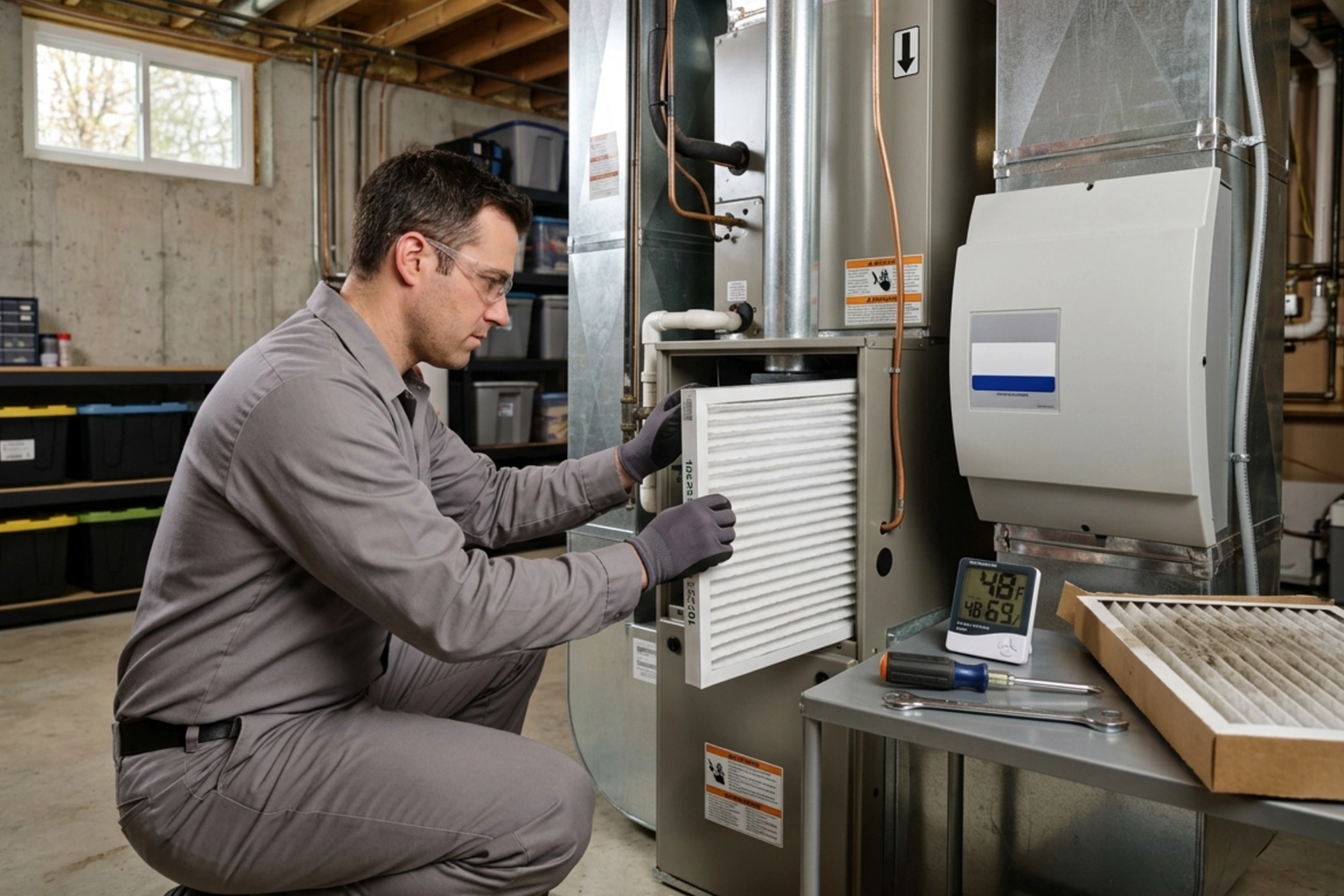
Change Your Air Filter Regularly
One of the easiest and most effective ways to control allergens is by changing your HVAC air filter. It’s designed to trap dust, pollen, pet dander, and other airborne particles before they circulate through your home. Over time, filters become clogged and less effective, allowing allergens to pass through more easily.
For most households, changing the air filter every one to three months is sufficient. But during peak allergy season, or if you have pets or other contributing factors, more frequent changes may be necessary. A clean filter not only improves air quality but also helps your HVAC system run more efficiently.
Check Your Filter Monthly
Even if you don’t replace your filter every month, it’s important to inspect it regularly. Homes with heavily shedding pets, ongoing renovations, or nearby construction projects may experience faster filter clogging. These situations introduce additional dust and debris into the air, making frequent checks essential. Staying proactive ensures your system continues to capture allergens effectively instead of circulating them.
Understand Whole-Home Air Quality Solutions
While standard air filters do a good job, they may not capture the smallest or most stubborn particles. That’s where whole-home air quality systems come in. These advanced solutions are designed to work alongside your HVAC system to provide a deeper level of filtration and purification.
Whole-house filtration systems use high-efficiency filters to trap microscopic particles, including fine pollen and bacteria. Air purifiers, on the other hand, can neutralize contaminants using technologies like UV light or ionization. Together, these systems help create a cleaner, healthier indoor environment by addressing allergens at a much more comprehensive level.
Reduce Allergens at the Source
Your HVAC system doesn’t just filter air—it also helps control humidity, which plays a major role in allergen levels. High humidity can encourage mold growth and dust mites, both of which are common allergy triggers. By maintaining balanced humidity levels, your system helps prevent these irritants from thriving in your home.
Keeping vents clean and ensuring proper airflow also supports your system’s ability to distribute clean air evenly. Small maintenance steps like vacuuming vents and keeping return registers unobstructed can make a noticeable difference.
Talk to an Expert About Your Options
If spring allergies are a recurring issue in your home, it may be time to explore more advanced solutions. Our team can assess your current system, recommend upgrades, and help you choose the right whole-home air quality products for your needs.
Investing in improved air filtration or purification isn’t just about comfort—it’s about creating a healthier living space for you and your family. With the right approach, your HVAC system can become one of your strongest allies in the fight against seasonal allergies.
Contact A-1 Mechanical Heating & Cooling for indoor air quality service in Lansing, MI. Comfort and Character You Can Depend On.