

When allergy season arrives, your home should be a place of relief—not a source of sneezing and itchy eyes. Choosing the right HVAC air filter in Holt, MI can make a noticeable difference in your indoor air quality and overall comfort. But with so many options available, it’s not always obvious which filter is best for your home or your HVAC system.
Why Air Filters Matter More During Allergy Season
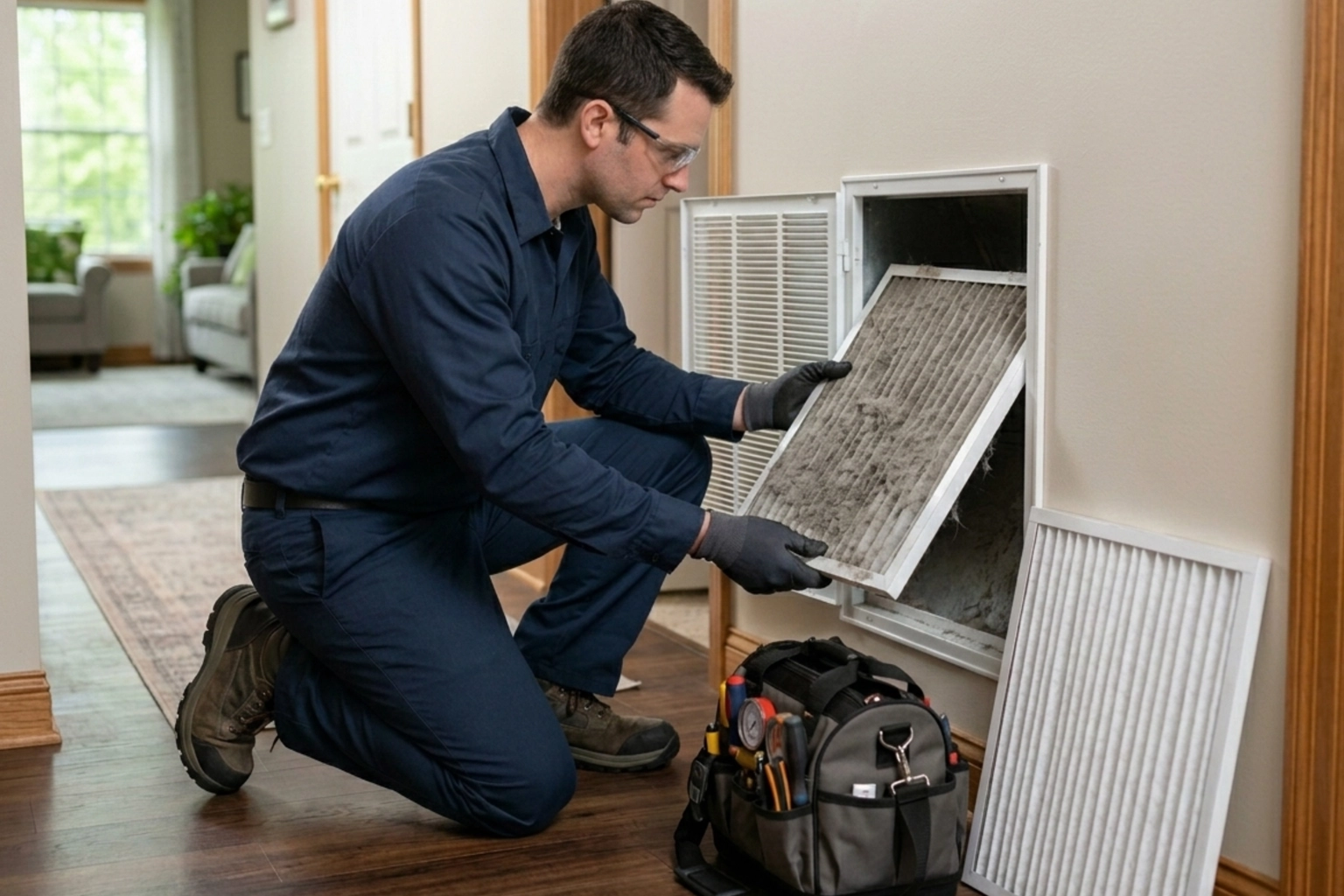
Air filters are your HVAC system’s first line of defense against airborne contaminants like pollen, dust, pet dander, and even microscopic particles. During peak allergy months, these pollutants become more concentrated, making a high-performing filter essential. A good filter not only protects your health but also keeps your HVAC system running efficiently by preventing buildup on critical components.
Understanding MERV Ratings
One of the most important factors when selecting an air filter is its MERV (Minimum Efficiency Reporting Value) rating. This scale measures how effectively a filter captures particles of different sizes.
- Lower-rated filters (MERV 1–4) capture larger particles like dust, while mid-range filters (MERV 5–8) can trap mold spores and pet dander.
- Higher-rated filters (MERV 9–13 and above) are designed to capture smaller particles, such as pollen and even some bacteria.
While it might seem like the highest MERV rating is always the best choice for your indoor air quality, that’s not necessarily true. Filters with very high ratings can restrict airflow, reducing efficiency and potentially straining the system.
Common Types of Air Filters
There are several types of HVAC air filters to consider, each with its own advantages:
- Fiberglass filters are the most basic and affordable option. They provide minimal filtration but allow for excellent airflow, making them suitable for systems that can’t handle thicker filters.
- Pleated filters are a popular upgrade. Made from folded materials, they offer a larger surface area to capture more particles without drastically reducing airflow. They strike a good balance for many households.
- Electrostatic filters use a self-charging mechanism to attract and trap particles. They can be disposable or washable and are often more effective than standard filters for allergy control.
- HEPA filters are among the most efficient options available, capturing up to 99.97% of airborne particles. However, they may require specialized systems or modifications to your HVAC setup.
Finding the Right Balance for Your System
The key to choosing the best air filter isn’t just about capturing the most particles—it’s about balance. Your filter needs to work with your HVAC system, not against it. A filter that’s too restrictive can reduce airflow, leading to higher energy bills and potential wear and tear on your equipment. Every home is different, and factors like pets, household size, and specific allergy concerns all play a role in determining the right filter.
Talk to a Professional for the Best Results
If you’re unsure which air filter is right for your home, the best next step is to speak with a trained technician on our team. We can evaluate your HVAC system, discuss your allergy concerns, and recommend a filter that delivers the ideal combination of airflow and filtration.
Contact A-1 Mechanical Heating & Cooling for help with an HVAC air filter in Holt, MI. Comfort and Character You Can Depend On.